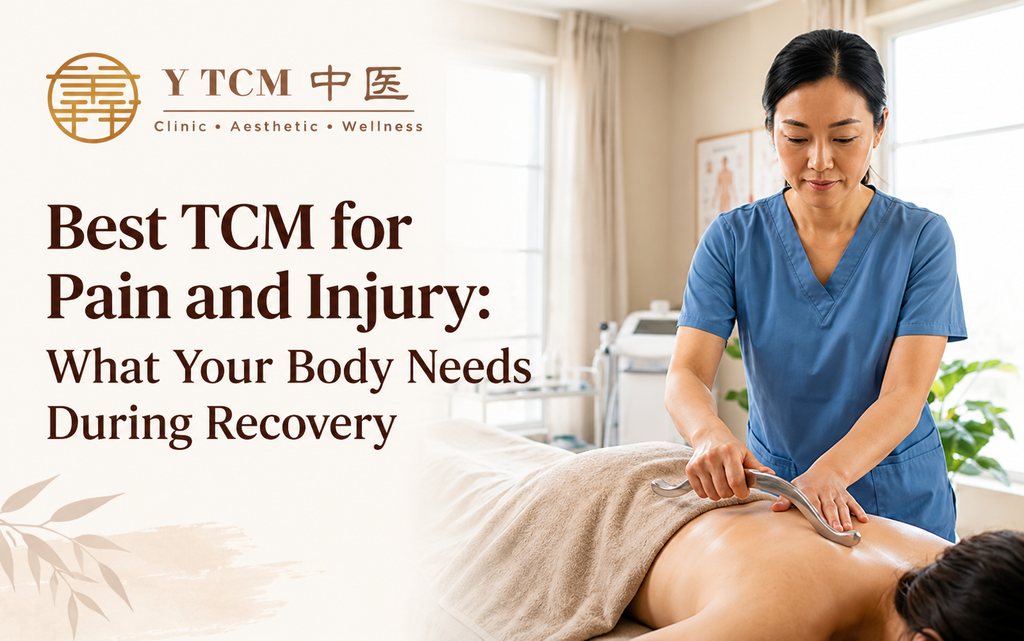
One injury can alter the way we move from morning to night. Having a sore shoulder could make it difficult to wear clothes. Sleep can be disturbed by back pain; a stiff knee may make walking more difficult. The first step before discovering the best TCM for pain and injury is to know the source of the pain.
There are a number of treatments available in Traditional Chinese Medicine (TCM), designed to ease pain and enhance mobility. But appropriate treatment will hinge on whether it is a new injury, chronic pain, or muscle tension.
Firstly, Understand the Nature of Pain
All pain is not equal. Short-term injury might require rest and rehabilitation, but long-term stiffness would likely benefit from a more comprehensive programme of treatment.
Consider these common situations:
- Pain restricts the movement: Back or neck pain that may respond to appropriate exercise and some types of acupuncture.
- Muscle tightness: Many people use TCM massage to relieve tension, after a serious injury is excluded.
- Chronic joint pain: Gentle movement techniques, for example, Tai Chi may facilitate balance and physical usefulness.
These kinds of things do not work for everyone. Correct diagnosis avoids the treatment that makes an injury might worse.
Incorporation of TCM with the Recovery Process
TCM uses different selections of approaches to deal with pain or movement problems. Acupuncture is the practice of inserting thin needles at various locations on the body. It has been shown over time that it may help some patients with chronic back pain and musculoskeletal ailments.
With Tui Na, a type of Chinese therapeutic massage for muscles and joints using hand movements. It can be useful for some forms of stiffness, but exerting strong pressure on a recent injury can actually make it worse.
Tai Chi and Qigong are slow-moving, controlled-breathing forms. They could assist with moving you around when safe, and if it is preferred for your condition.
The best TCM for pain and injury, is not one single treatment. An option that corresponds with your symptoms, and is used to help alongside proper medical treatment.
Indicators That a TCM Clinic is Reputable
Find a practitioner before starting treatment who:
- Asks questions on your injury, past medical history, and medicines.
- Provides a plain language description of probable benefits and chances, about each appointment or shot.
- To refer you for the medical treatment when your symptoms need further examination.
Steer clear of clinics that spend frivolously with glorious recoveries or recovering every sort of injury.
When Traditional Therapy Should Wait
Intense pain, gross swelling, distention, or deformity of the bone joint after injury can get loss of sensation function and inability to bear weight. You may suspect that an entity is very serious injury! You would want to seek medical care first before considering TCM.
Acupuncture performed by an appropriately trained practitioner with sterile, single-use needles. Do not use massage on fracture or blood clot.
Choose Recovery Over Quick Fixes
Care that puts your health first is what you should be looking for in the best TCM for pain and injury, etc. Conditions that might benefit from acupuncture, appropriate massage, or gentle movement are not within a medical diagnosis.
Talk to a health professional about what you can do. Having a plan of treatment suited for your pain, range of motion, and rehabilitation requirements paves the way toward safer movement and better management of pain.